
 +86-15916242887


News

Surface Mount RF Transformers for Compact Wireless Gateways
2026-07-03
A surface mount Rf Transformer for wireless gateway is often selected late in a project, but it can decide whether a radio, communication module or measurement board can be tuned without repeated redesign. In wireless gateways, IoT nodes and small antenna boards, this component is not just a line item in the bill of materials. It is part of the signal path, part of the impedance plan and, in many products, part of the reason one board behaves better than another during validation. A useful product page should therefore help engineers compare measurable electrical behavior, not only brand names or broad supplier claims.
The first selection point is the function of the component. Depending on the design, surface mount RF transformer components may be used to fit RF conversion and matching functions into dense layouts without creating assembly or tuning problems. That role must be clear before the part number discussion begins. A 1:1 RF transformer, a 1:4 Impedance Transformer, a 50 ohm RF transformer and a wideband RF balun transformer can all appear in similar RF products, but they solve different problems. When the role is defined, the next filter is the electrical window: package size, frequency range, insertion loss, solderability and nearby antenna layout. These values tell the engineer whether a candidate belongs on the first shortlist or should be removed before samples are requested.
EASTEVER product tables should make those decisions easier by showing Zo(ohm), impedance ratio, Package, Min(MHz), Max(MHz), IL, Phase, Amp and Input RL. Zo(ohm) and impedance ratio describe the operating environment and transformation target. Min(MHz) and Max(MHz) show whether the part covers the real operating band rather than a convenient center point. IL, or insertion loss, protects the signal budget. Phase and Amp balance matter whenever the circuit uses balanced RF ports, differential receivers or balun conversion. Input RL helps the engineer judge reflection at the source side, which is especially important near connectors, filters, RF switches and IC ports.
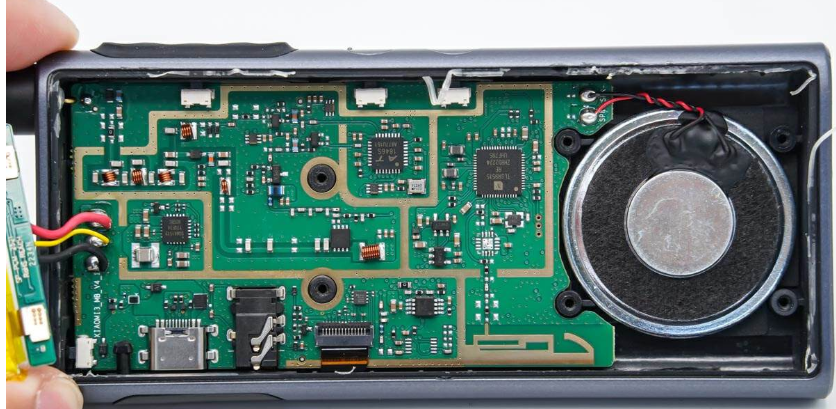
A gateway board may combine RF, power conversion and digital interfaces in one small enclosure. The transformer must be placed with enough RF discipline to avoid turning a compact design into a difficult tuning job. In real hardware, the surrounding circuit often changes the result more than expected. The transformer or magnetic component sees pad capacitance, ground return, solder geometry, nearby shields, connector launches and sometimes the final product enclosure. For that reason, a catalog value should be treated as a starting point for engineering evaluation. The final decision should be based on measurement in the target board, with the same connector, enclosure, cable and antenna conditions that the product will use in production.
Reference models such as TCM2-63WX+, TC1-1-13M+ and DBTC-10-13LX+ are useful in communication between engineering and procurement because they describe a known type of function. They can also help a buyer explain why a project needs a surface mount Rf Transformer, a 50 ohm Rf Transformer, a broadband transformer or a balun with a particular frequency range. However, a reference model should not be presented as an automatic direct replacement. It is better to describe EASTEVER parts as engineering alternatives for evaluation. The comparison should cover frequency range, impedance ratio, insertion loss, phase and amplitude balance, return loss, package, footprint and availability.
IC context also helps make the selection more concrete. Boards using SX1262, CC1101 and ADF7021 usually have defined impedance expectations, reference layouts or evaluation-board examples, but the passive component still has to match the actual product. A reference design may use a certain balun, choke or transformer because the evaluation board had a specific band, connector and layer stack. When the same IC is moved into a handheld radio, a charging pile communication board, a data acquisition card or a compact wireless gateway, the passive selection may need to change.
For IoT hardware engineers and sourcing teams building compact wireless products, the value of a well-written category page is speed and confidence. The page should allow a reader to narrow choices before sending an inquiry. It should also give procurement enough language to ask the right question: required impedance, operating band, package limit, insertion loss target, balance requirement, return loss expectation and whether the part is being used for a new design or an alternative-source review. This reduces the chance that a buyer asks only for a part number while the engineer still needs the electrical assumptions checked.
The most common selection mistake is using a package that saves space but makes the RF route too narrow, too long or too sensitive to ground return. This is why the page should not overpromise. RF passive and magnetic components are strongly affected by layout and system conditions. A responsible selection note tells the reader what the component can help solve, what data should be compared and why board-level testing is still required. That tone is more credible to engineers than broad claims about universal compatibility.
A good surface mount Rf Transformer for wireless gateway page should guide the reader from application need to measurable comparison. Start with the function, narrow by Zo(ohm) and ratio, confirm Min(MHz) and Max(MHz), compare IL, Phase, Amp and Input RL, then check package and layout fit. After that, request samples and validate on the actual board. This structure serves RF engineers, hardware engineers, procurement engineers and alternative-part engineers because it connects the product database to the decisions they really make.